Use Cases
A quick look at the type of 3D Datasets we build
Robotics
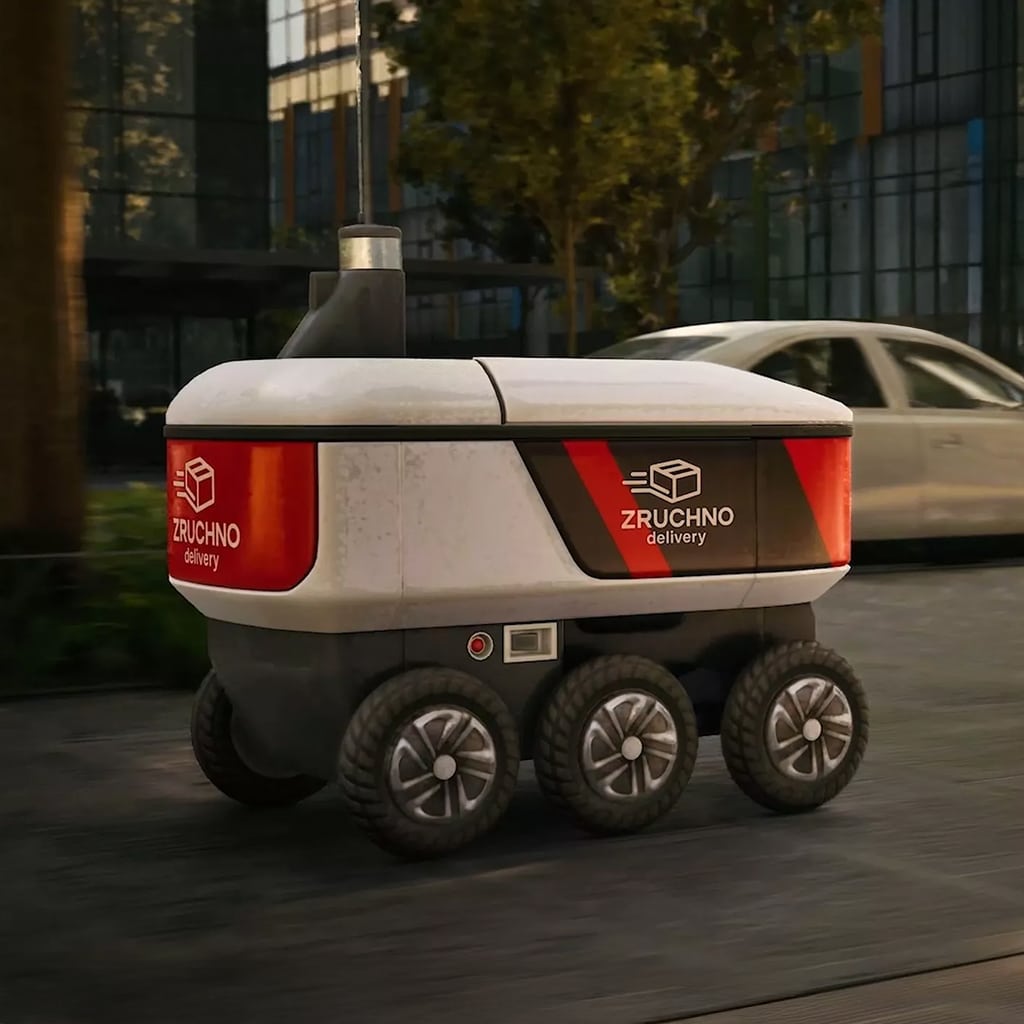
Robotics teams come to us with a familiar problem: their robots need to see, understand, and interact with the world long before it is safe or practical to test on real hardware. Synthetic 3D AI datasets are where our work starts turning that problem into a reliable pipeline.
In our robotics datasets, we rebuild the kinds of spaces your robots operate in. Warehouses, factories, homes, and offices, and then populate them with hundreds of carefully crafted & annotated objects, materials, and edge cases. We push variation in lighting, clutter, and object placement so models learn to generalize instead of overfitting to a single lab setup.
From there, we categorize each dataset around concrete tasks: bin picking, shelf stocking, inspection, indoor navigation, or human–robot collaboration. Our assets are optimized for modern simulation stacks, so your team can spin up thousands of scenes and interactions, train vision and policy models at scale, and then validate them against new synthetic edge cases before ever risking real downtime or damage.
The result is not just more data, but better learning loops. With our 3D AI datasets, robotics companies can iterate faster, cut down on costly physical data collection, and deploy robots that arrive in the real world already “fluent” in the environments they’re about to enter. We focus on closing that last sim‑to‑real gap so your team can focus on building robots that are smarter, safer, and ready for production.
Industrial automation and logistics tech companies come to us when they are building the next generation of vision systems, robots, and AI tools — but do not want to own the heavy lift of creating all the 3D training data themselves. Our role is clear and focused: we design and deliver the synthetic 3D AI datasets that power their products, so their teams can concentrate on models, software, and deployment instead of data generation.
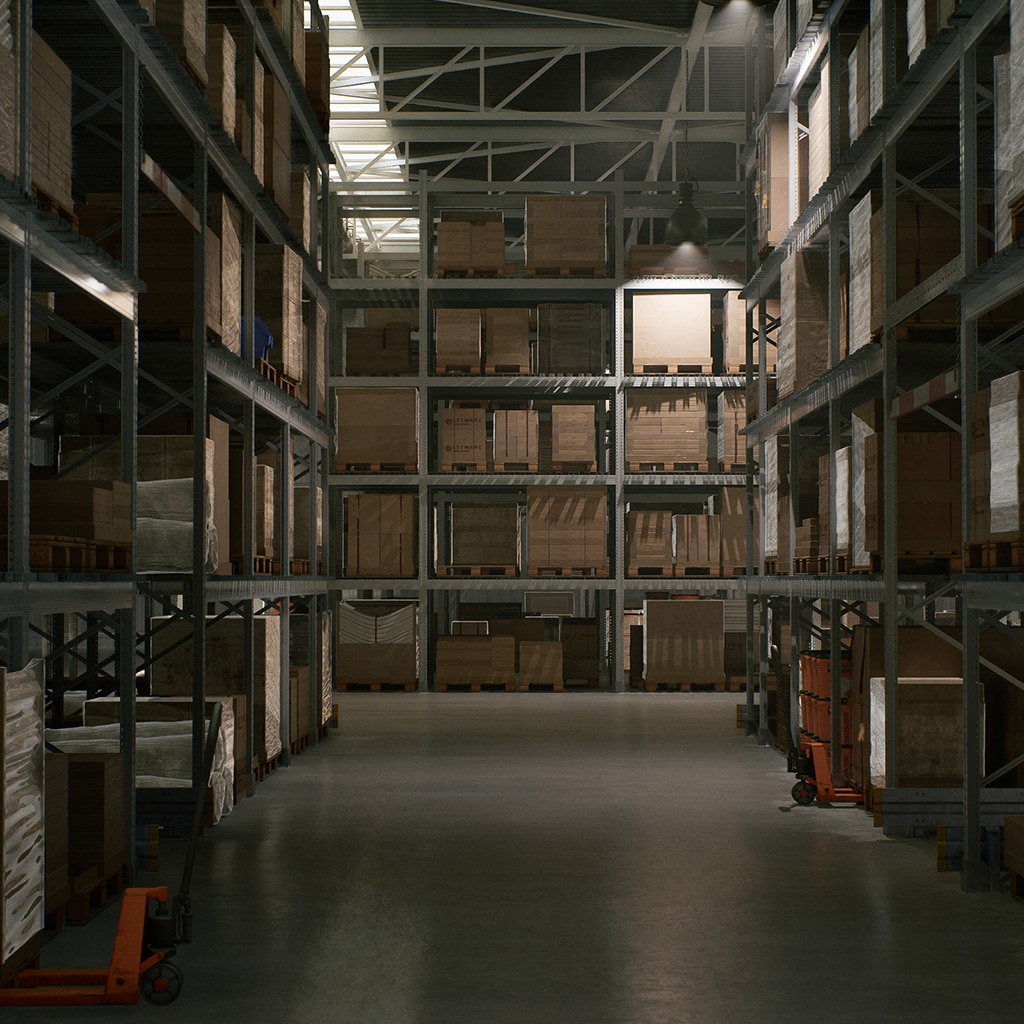
For these clients, we recreate factories, warehouses, and fulfillment centers in 3D, then simulate the flows that matter to them: pallets moving on conveyors, boxes being picked and placed, labels being checked, or shelves being scanned by cameras and robots. We push variation in layouts, lighting, materials, and product configurations so their models can handle real‑world logistics complexity rather than a single “perfect” demo setup. Synthetic intralogistics and manufacturing scenes like this are increasingly used to train and validate AI for tracking, inspection, and inventory tasks.
Across these projects, we categorize datasets around specific use cases — parcel handling, pallet and rack monitoring, inline visual inspection, or autonomous warehouse robotics — and keep a strong focus on detailed annotation: per‑object and per‑defect labels, segmentation, poses, and pass/fail states for every frame. Our only goal is to supply clean, richly annotated 3D AI datasets that plug directly into our clients’ pipelines, helping them bring automation and logistics products to market faster and with far less risk around data quality and coverage
Industrial Automation
Simulation
Simulation and safety companies come to us when they need to model scenarios you never want to stage in real life — collisions, extreme weather, hazardous sites, or dense urban traffic. Our focus is on building the 3D worlds behind those simulations: the environments, objects, and variations that make dangerous situations both realistic and repeatable. Synthetic content like this has become essential for stress‑testing safety‑critical AI without real‑world risk.
We recreate detailed cities, highways, industrial plants, and public spaces, then populate them with vehicles, props, infrastructure, and environment variations such as weather, time of day, and visibility. Each project is categorized around a specific simulation goal — from self‑driving and ADAS testing to emergency and incident scenarios — and built to plug into existing simulation engines and data pipelines. By focusing purely on high‑quality 3D assets and environments tailored for synthetic data generation, we give simulation companies the visual foundation they need to generate their own trajectories, events, and labels at scale.

Synthetic Data

Companies building vision and AI products come to us when they know they need synthetic data but don’t want to spend months creating all the 3D content behind it. Our role is to supply high‑quality 3D assets and environments that form the foundation of their synthetic data pipelines, letting them focus on models and tooling instead of content production. Synthetic data built on this kind of tailored 3D library has become one of the fastest ways to train robust computer vision systems.
We focus purely on the virtual world — objects, materials, lighting, and scenes — not the training code. Each project is categorized around a concrete use case, from robotics and industrial inspection to automotive, retail, or AR/VR, so teams can plug our assets and environments directly into their own render and simulation stacks. By delivering 3D content designed specifically for synthetic data generation, we help companies scale datasets, cover edge cases, and iterate on AI models without rebuilding their 3D library every time.
Digital twin platforms come to us when they need rich, accurate 3D worlds to mirror real spaces — factories, warehouses, campuses, or entire city blocks — but don’t want to build every asset and environment from scratch. Our role is to create the 3D layer of their twins: performance‑ready assets and scenes that plug into their own simulation, IoT, and analytics stacks. High‑quality 3D models have become a core ingredient in making digital twins useful for both visualization and AI.
We focus on capturing structure, materials, and layout at the right level of realism and efficiency, so digital twin teams can overlay live data, run “what‑if” simulations, or generate synthetic views for computer vision without fighting their content. Whether it is an industrial site, logistics hub, or built environment, we categorize each project around its use case and deliver a tailored library of assets and environments ready for real‑time engines and twin platforms. This lets our clients spend their time on data, logic, and operations, while relying on us for the 3D foundation that makes their digital twins believable and actionable
Digital Twins